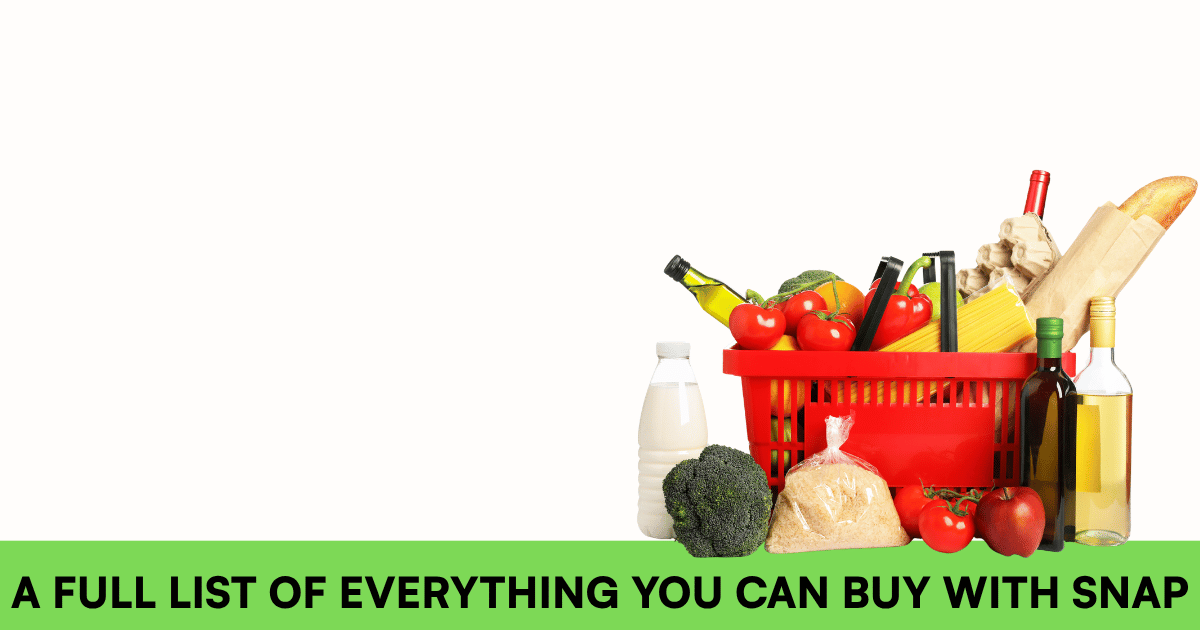
Not sure what you can buy with your EBT card? You are not alone. Millions of SNAP recipients every year get confused at the checkout line about which items are SNAP eligible food and which are not.
This guide covers every category of EBT eligible food, what food stamp eligible items look like in practice, and answers the most common questions about what you can and cannot put in your cart.
Before diving in, you can also use our Food Stamp Estimator to check how much you may qualify for each month — it takes under 60 seconds.
What Are SNAP Eligible Food Items?
SNAP eligible food items are groceries and food products that the USDA allows you to purchase using your EBT card. The rule is straightforward: if a product is intended for human consumption and sold for home preparation or eating at home, it is almost always an EBT eligible item.
The SNAP program defines eligible food as “any food or food product for home consumption.” That broad definition covers everything from fresh produce to canned goods to birthday cake ingredients — as long as it is food meant to be eaten, it typically qualifies.
According to the [EXTERNAL LINK: USDA Food and Nutrition Service → fns.usda.gov/snap/eligible-food-items], SNAP benefits can be used at over 250,000 authorized retailers nationwide, including grocery stores, supermarkets, warehouse clubs, and many farmers markets.
Complete List of SNAP Eligible Foods
Fruits and Vegetables
All fresh, frozen, canned, and dried fruits and vegetables are SNAP eligible food items. There is no restriction based on whether a fruit or vegetable is organic or conventional, fresh or processed.
- Fresh fruits: apples, bananas, grapes, strawberries, oranges, mangoes, avocados, and all others
- Fresh vegetables: broccoli, carrots, spinach, potatoes, onions, tomatoes, peppers, and all others
- Frozen fruits and vegetables: any variety, plain or with added sauce
- Canned fruits and vegetables: including those packed in syrup or juice
- Dried fruits: raisins, dates, cranberries, dried mango, and others
- Dried vegetables: sun-dried tomatoes, dried beans, lentils, and peas
- 100% fruit and vegetable juice: eligible as long as it contains at least one type of fruit or vegetable
Farmers market tip: Many farmers markets now accept EBT cards directly. Some markets also participate in programs that double your EBT dollars when spent on fresh produce. Ask at your local market. For more on how the program works, see our guide on what food stamps are and how they work.
Meat, Poultry, and Seafood
All raw and packaged meat, poultry, and seafood are EBT eligible food items. There is no restriction on cut, grade, or type.
- Beef: ground beef, steaks, roasts, stew meat, short ribs
- Pork: pork chops, bacon, ham, sausage, ribs, ground pork
- Poultry: chicken (whole, breasts, thighs, drumsticks, wings), turkey, duck
- Seafood: fish fillets, shrimp, crab, lobster, tilapia, salmon, tuna, clams
- Deli meats: sliced turkey, ham, salami, bologna (packaged for home use)
- Canned meats: canned tuna, salmon, chicken, sardines, spam
Note on hot food: Pre-cooked rotisserie chicken is not SNAP eligible in most stores because it is sold hot and ready to eat. However, a raw whole chicken you cook at home is fully eligible.
Dairy Products
Dairy products are among the most commonly purchased SNAP eligible food items.
- Milk: whole, 2%, 1%, skim, lactose-free, ultra-pasteurized
- Cheese: all types — cheddar, mozzarella, American, Swiss, shredded blends, cottage cheese, cream cheese
- Eggs: all varieties including free-range, organic, and cage-free
- Butter and margarine
- Yogurt: all flavors and types including Greek yogurt
- Sour cream and cream
- Ice cream and frozen dairy desserts
- Non-dairy alternatives: oat milk, almond milk, soy milk, coconut milk — all SNAP eligible
Bread, Cereals, and Grains
All bread, grain products, and cereals are food stamp eligible items regardless of brand or type.
- Bread: white, wheat, sourdough, rye, gluten-free, rolls, buns, tortillas, pita
- Cereals: all varieties including granola, oatmeal, and hot cereals
- Rice: white, brown, wild, jasmine, basmati — any variety
- Pasta: spaghetti, penne, macaroni, egg noodles, ramen noodles
- Flour: all-purpose, bread, whole wheat, almond, coconut, rice flour
- Cornmeal and grits
- Crackers and breadsticks
- Pancake and waffle mixes
- Stuffing mix
Snack Foods and Non-Alcoholic Beverages
This is one of the most misunderstood categories of SNAP eligible foods. Snack foods — even ones that are not particularly nutritious — are fully eligible.
SNAP eligible snack foods include:
- Chips: potato chips, tortilla chips, pretzels, popcorn
- Cookies, cakes, donuts, and pastries
- Candy and chocolate
- Crackers
- Nuts and trail mix
- Granola bars and protein bars
- Ice cream, popsicles, and frozen treats
SNAP eligible beverages include:
- Water and sparkling water
- Soda and soft drinks
- Juice and juice drinks (even those with less than 100% juice)
- Sports drinks
- Energy drinks (if labeled as a food product with a Nutrition Facts panel)
- Coffee and tea (in bags, grounds, or canned — cold, not hot)
- Drink mixes and powdered beverages
One important note: The SNAP program does not restrict food purchases based on nutrition or healthfulness. Candy, soda, and chips are just as SNAP eligible as broccoli and brown rice. This is federal policy — individual retailers cannot limit what eligible food items you buy.
Baby Food and Infant Formula
All commercially prepared baby food and infant formula is SNAP eligible. This includes:
- Jarred and pouched baby food (fruits, vegetables, meats, grains)
- Infant formula — all brands and varieties
- Toddler snacks and cereals
- Baby juice and water formulated for infants
Seeds and Plants That Produce Food
One of the lesser-known SNAP eligible items is seeds and plants that produce food for the household to eat. This includes:
- Vegetable seeds and seedlings: tomato plants, pepper seeds, squash seeds
- Fruit seeds and plants: strawberry plants, herb seeds
- Herb seeds: basil, cilantro, parsley, mint
This exception is specifically designed to support home gardening as a way to extend food budgets.
Condiments, Spices, and Cooking Ingredients
All cooking ingredients are EBT eligible food items.
- Cooking oils: vegetable oil, olive oil, coconut oil, canola oil
- Condiments: ketchup, mustard, mayonnaise, hot sauce, salsa, soy sauce
- Spices and seasonings: salt, pepper, garlic powder, cumin, paprika
- Sugar and sweeteners: white sugar, brown sugar, honey, maple syrup, artificial sweeteners
- Baking supplies: baking powder, baking soda, vanilla extract, chocolate chips, cocoa powder
- Vinegar and salad dressings
- Canned sauces: tomato sauce, pasta sauce, coconut milk
- Broths and stocks
- Soup and stew mixes
Frozen Foods
Nearly all frozen food is SNAP eligible. This includes:
- Frozen meals and entrees (TV dinners, frozen pizza, burritos, pot pies)
- Frozen vegetables and fruit
- Frozen meat and seafood
- Frozen breakfast items (waffles, pancakes, breakfast sandwiches)
- Frozen desserts
Exception: Frozen meals sold hot and ready to eat from a heating station (as in some grocery stores) are not SNAP eligible in most states.
What Is NOT SNAP Eligible?
Knowing what you cannot buy with food stamps is just as important as knowing what you can. Federal law prohibits SNAP benefits from being used for the following:
Alcohol and Tobacco
- Beer, wine, spirits, and all alcoholic beverages
- Cigarettes, cigars, chewing tobacco, and vaping products
These are explicitly excluded by federal law with no exceptions.
Hot Prepared Foods
- Hot foods sold ready to eat at a grocery store deli counter or steam table
- Restaurant meals (with very limited exceptions for elderly or disabled recipients in some states)
- Hot rotisserie chicken or hot pizza slices
- Foods that are heated by the store before sale
The key distinction: temperature at the time of purchase. A frozen pizza you take home and cook is SNAP eligible. A hot slice from the deli is not.
Non-Food Items
SNAP benefits cannot be used for anything that is not food for human consumption, including:
- Household cleaning products (laundry detergent, dish soap, bleach, paper towels)
- Personal care items (shampoo, toothpaste, deodorant, razors, soap)
- Pet food and pet supplies
- Medications and vitamins
- Dietary supplements (even if sold in the food aisle)
- Cosmetics and beauty products
- Live animals (with the exception of fish and shellfish sold for food)
Vitamins and Supplements
Even though vitamins and supplements are sold in grocery stores and some are marketed as foods, they are not SNAP eligible. The deciding factor is whether the product has a Nutrition Facts label (eligible) or a Supplement Facts label (not eligible).
- Products with a Nutrition Facts panel → SNAP eligible
- Products with a Supplement Facts panel → not SNAP eligible
This is why energy drinks like Red Bull are SNAP eligible (Nutrition Facts label) but a vitamin C supplement is not.
SNAP Eligible Food Items: Quick Reference Table
| Food Category | SNAP Eligible? | Notes |
|---|---|---|
| Fresh fruits and vegetables | Yes | All varieties |
| Frozen fruits and vegetables | Yes | All varieties |
| Canned fruits and vegetables | Yes | Including in syrup |
| Fresh meat and poultry | Yes | All cuts |
| Seafood | Yes | All types |
| Eggs | Yes | All varieties |
| Dairy (milk, cheese, yogurt) | Yes | All types |
| Non-dairy milk alternatives | Yes | Oat, almond, soy |
| Bread and cereals | Yes | All types |
| Rice and pasta | Yes | All types |
| Snack foods and candy | Yes | No nutritional restrictions |
| Soda and juice | Yes | All non-alcoholic drinks |
| Baby food and infant formula | Yes | All brands |
| Seeds and food-producing plants | Yes | For home gardening |
| Cooking oils and spices | Yes | All varieties |
| Frozen meals | Yes | If sold cold |
| Alcohol | No | Federal prohibition |
| Tobacco | No | Federal prohibition |
| Hot prepared food | No | Sold hot and ready to eat |
| Vitamins and supplements | No | Supplement Facts label |
| Cleaning products | No | Non-food items |
| Pet food | No | Not for human consumption |
| Medications | No | Even OTC |
| Personal care products | No | Soap, shampoo, etc. |
EBT Eligible Food at Specific Retailers
Walmart
Walmart is one of the most widely used retailers for EBT eligible food items. Nearly every food item in the grocery section is SNAP eligible. You can also use your EBT card for Walmart grocery pickup and delivery in most states — a convenient option if you lack transportation.
Target
Target accepts EBT for all SNAP eligible items in the grocery section. The Market area of Target stores carries a full range of fresh produce, dairy, meat, and packaged foods — all EBT eligible.
Costco and Sam’s Club
Both warehouse clubs accept EBT cards for eligible food purchases. Buying in bulk can stretch your SNAP benefits further since per-unit prices are often lower. Note that membership fees cannot be paid with EBT.
Amazon Fresh and Online Grocery
In most states, you can use your EBT card to shop for SNAP eligible food items on Amazon Fresh and Walmart.com. Online grocery shopping with EBT is available in all 50 states as of 2026, though delivery fees must be paid with a separate payment method.
Dollar Stores
Dollar General and Dollar Tree accept EBT cards for SNAP eligible food purchases. These stores often carry canned goods, packaged snacks, drinks, and sometimes fresh or frozen food — all eligible if purchased cold and for home preparation.
Common Questions About SNAP Eligible Food Items
Can I buy organic food with SNAP?
Yes. Organic produce, organic meat, and organic packaged foods are SNAP eligible food items just like their conventional counterparts. There is no restriction on purchasing organic with EBT. If the food qualifies under SNAP rules, the organic certification does not change that.
Are protein shakes SNAP eligible?
It depends on the label. Protein shakes that have a Nutrition Facts panel (like Ensure, Boost, or most ready-to-drink shakes in the food aisle) are SNAP eligible. Protein powders and shakes with a Supplement Facts panel are not.
Can I buy energy drinks with EBT?
Most energy drinks like Red Bull, Monster, and Gatorade are SNAP eligible because they carry a Nutrition Facts label and are classified as food products, not supplements. However, some products marketed as dietary supplements with a Supplement Facts label are not eligible.
Is birthday cake SNAP eligible?
Yes. Cakes, both from the bakery section and pre-packaged, are SNAP eligible food items. A birthday cake purchased cold from the bakery counter is eligible. A cake slice served hot or on a plate in a café is not.
Can I use SNAP at a farmers market?
Many farmers markets are now authorized SNAP retailers. Some even have programs that double your EBT dollars on fresh produce — for example, spending $10 in SNAP benefits gives you $20 worth of produce. Look for a sign at your local market or ask a vendor.
Are coffee and tea SNAP eligible?
Yes. Coffee beans, ground coffee, instant coffee, and tea bags are all SNAP eligible food items. Cold canned coffee drinks sold in the grocery aisle are also eligible. However, a hot cup of coffee purchased at a café or coffee stand is not SNAP eligible.
Can I buy food for my pets with EBT?
No. Pet food is not SNAP eligible because it is not intended for human consumption. Fish sold live for human consumption (such as live lobster) is eligible, but fish sold as pet food is not.
What if I accidentally buy something not SNAP eligible?
If a non-eligible item is rung up with your SNAP purchase, you will need to pay for it with another form of payment. The register will typically separate eligible and non-eligible items automatically. If you are unsure, ask the cashier before completing your transaction.
How to Tell If a Food Is SNAP Eligible
A simple rule to remember:
If it has a Nutrition Facts label and is sold cold or at room temperature for home consumption — it is almost certainly SNAP eligible.
When in doubt, look for:
- Nutrition Facts label (eligible) vs. Supplement Facts label (not eligible)
- Temperature at point of sale — cold and packaged (eligible) vs. hot and ready to eat (not eligible)
- Category — food for people (eligible) vs. alcohol, tobacco, cleaning products, or pet food (not eligible)
Maximize Your SNAP Eligible Food Budget
Your EBT benefits go further when you plan ahead. A few strategies that work:
- Buy store-brand versions of SNAP eligible items — same nutrition, lower price
- Choose frozen over fresh for produce that spoils quickly — frozen vegetables and fruit are just as nutritious and often significantly cheaper
- Use unit price comparisons rather than package price — larger sizes often cost less per ounce
- Shop at discount grocers like Aldi, Lidl, or Grocery Outlet where SNAP eligible food items are priced lower
- Know your income limits — if your household size or income has changed, check the current SNAP income limits to see if your benefit amount should be adjusted
- Farmers markets with SNAP matching programs can double your purchasing power on fresh produce
- Plan meals around what’s on sale — SNAP benefits cover all eligible foods, so building your week’s meals around discounted items makes every dollar go further
Use our free Food Stamp Estimator to check exactly how much you qualify for each month — no sign-up required. For a full breakdown of income limits and who qualifies, see our food stamp eligibility guide. To apply in person or find local assistance, use our food stamp office locator to find the nearest office in your state.
Frequently Asked Questions
What food items can you buy with food stamps?
You can buy almost any food intended for home consumption with food stamps, including fresh fruits and vegetables, meat and seafood, dairy products, bread and grains, frozen foods, snacks, candy, soda, baby food, infant formula, and seeds for home gardening. The main exclusions are alcohol, tobacco, hot prepared foods, vitamins and supplements, pet food, and non-food household items.
What items are not SNAP eligible?
Items that are not SNAP eligible include alcohol, tobacco, hot foods sold ready to eat, vitamins and dietary supplements, pet food, cleaning products, personal care items like soap and shampoo, medications, and any non-food household products. The SNAP program is strictly limited to food for human consumption sold for home preparation.
Can you buy junk food with food stamps?
Yes. Federal law does not restrict SNAP purchases based on nutrition. Chips, candy, cookies, soda, and ice cream are all SNAP eligible food items. SNAP recipients have the same right to choose what to eat as anyone else. There is no nutritional test for food stamp eligibility.
Are vitamins SNAP eligible?
No. Vitamins and dietary supplements are not SNAP eligible, even when sold in grocery stores. The distinction is the product label — a Supplement Facts label means it is not eligible, while a Nutrition Facts label means it is food and therefore eligible.
Can you buy coffee with food stamps?
Yes. Packaged coffee — beans, ground, instant, or pods — is SNAP eligible. Cold canned or bottled coffee drinks are also eligible. Hot coffee prepared and served at a café or deli counter is not SNAP eligible because it is a hot prepared beverage sold for immediate consumption.
Is soda SNAP eligible?
Yes. Soda, energy drinks, sports drinks, and all non-alcoholic beverages are SNAP eligible food items. There is no restriction on purchasing sugary drinks with EBT benefits. Only alcoholic beverages are excluded.
Can you use EBT at restaurants?
In most cases, no. SNAP benefits cannot be used at restaurants. However, a small number of states participate in the Restaurant Meals Program (RMP), which allows elderly, homeless, and disabled SNAP recipients to use their EBT card at certain participating restaurants. States with active RMP programs include California, Arizona, and Michigan. For a full overview of how SNAP works, visit our what is food stamp guide.
Summary: SNAP Eligible Food Items
SNAP eligible food items cover almost everything you would find in the grocery section of a store — fresh produce, meat and seafood, dairy, bread and grains, frozen foods, snacks, beverages, baby food, and cooking ingredients.
The USDA’s definition is broad and inclusive by design. If it carries a Nutrition Facts label and is sold cold or packaged for home preparation, it is almost certainly an EBT eligible item.
Understanding what your food stamp benefits cover helps you shop with confidence and make the most of every dollar. To find out how much you may qualify for each month, use our free Food Stamp Estimator — it takes under 60 seconds.
Source: USDA Food and Nutrition Service — SNAP Eligible Food Items. Last reviewed for accuracy: 2026.